What Is Scaffolding? A Simple Guide to Construction Scaffolding
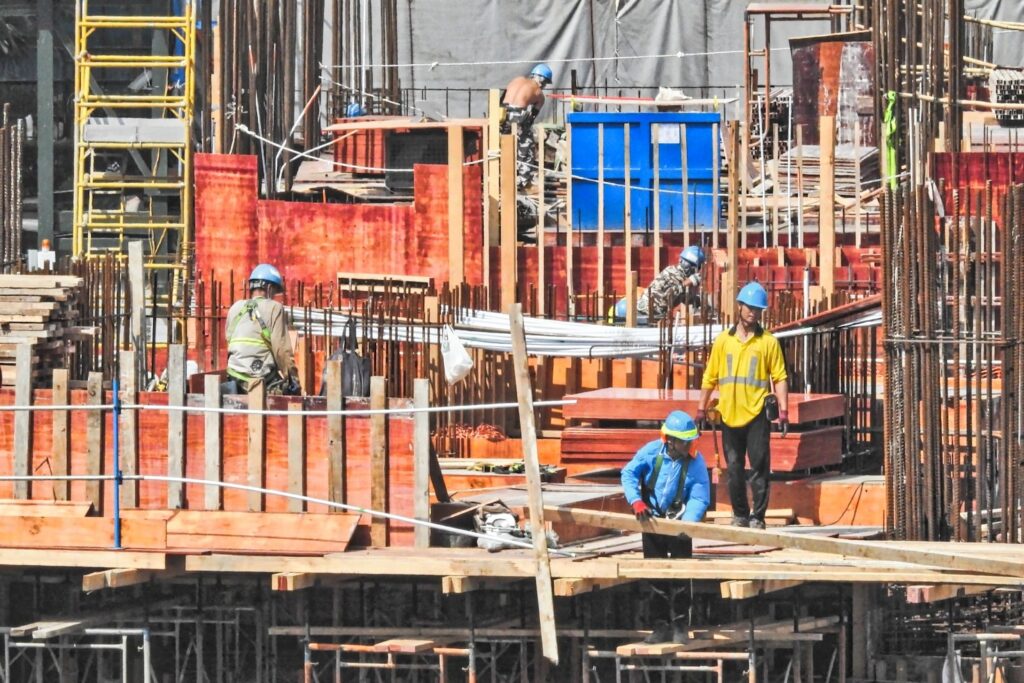
if you walk past a construction site and you will probably see a network of steel pipes, frames, platforms and braces climbing up the side of a building.
That is scaffolding.
But scaffolding is more than a collection of metal pipes around a building.
It is a temporary access and working system designed to give construction workers a stable place to work at height and, where the system is designed for it, to support tools and materials during construction.
In simple terms, scaffolding helps workers safely reach, work on and move around parts of a building that would otherwise be difficult or dangerous to access.
Why Is Scaffolding Used in Construction?
As a building gets taller, simply using ladders becomes impractical for many construction activities.
Workers may need to plaster a wall, install windows, paint a façade, fix electrical services, carry out masonry work or perform finishing work several floors above ground.
Scaffolding creates a more suitable working environment for these tasks.
A properly planned scaffold can provide:
- Elevated working platforms
- Safer access to higher levels
- Space for workers to move around while working
- Support for tools and materials within its designed capacity
- Edge protection and other fall-protection measures
- Access along building façades and difficult-to-reach areas
OSHA defines a scaffold as a temporary elevated platform and its supporting structure used to support workers, materials, or both.
That definition is important because it shows that scaffolding is not simply about getting higher.
It is about creating a temporary system that can be used at height while maintaining adequate stability, access and load capacity.
What Is Scaffolding Made Of?
The exact components depend on the type of scaffold being used, but a typical scaffold system may include:
Standards or uprights — vertical members that carry loads down toward the foundation.
Ledgers — horizontal members running along the length of the scaffold.
Transoms — horizontal members that run across the scaffold and can support platforms.
Braces — members that help keep the structure stable and prevent unwanted movement.
Base plates or bases — components at the bottom that help transfer loads to a suitable foundation.
Platforms or decks — the working surfaces where workers stand.
Guardrails and toe boards — protective components used around working platforms where required.
Couplers and fittings — connectors used to join scaffold components in systems such as tube-and-coupler scaffolding.
The components work together as a system. A strong-looking individual pipe does not automatically make a safe scaffold.
What Types of Scaffolding Are Used?
There is no single type of scaffolding for every construction project.
Common systems include frame scaffolding, tube-and-coupler scaffolding, mobile scaffolds, suspended scaffolds and other specialized systems.
The right choice depends on factors such as:
- Building height
- Shape and layout of the structure
- Type of work being performed
- Required working platform
- Expected loads
- Access requirements
- Ground conditions
- Project duration
For example, a simple low-rise building may require a very different scaffolding arrangement from a multi-storey commercial building.
This is why buying or renting “some scaffolding” is not always enough information for a supplier.
A good supplier should want to understand what you are building, where you need the scaffold, how high the work is, what you are doing from the platform and how long you need it.
Is Scaffolding Only Used for Working at Height?
No.
Although access and elevated work are its most obvious uses, scaffolding can serve several purposes on a construction site.
It can be used for:
- Blockwork
- Plastering
- Painting
- Rendering
- Cladding
- Building maintenance
- Installation work
- Inspection and repair
- Façade work
- High-rise construction
Depending on its design and intended use, scaffold systems can also accommodate materials and equipment.
But load capacity matters.
A scaffold should never be treated as a convenient place to pile materials simply because there is space available. The scaffold and its components must be used within their designed or rated capacity. OSHA, for example, requires scaffolds covered by its construction standard to support their own weight and at least four times the maximum intended load.
What Makes Scaffolding Safe?
This is where scaffolding becomes much more serious than it looks.
A scaffold may appear perfectly fine from the ground and still have problems with its foundation, bracing, loading, access or stability.
Important considerations include:
1. A stable foundation
The scaffold needs an adequate foundation capable of carrying the loads transferred into it.
A weak or uneven base can compromise the entire structure.
2. Proper bracing and stability
As scaffolding gets taller, stability becomes increasingly important.
Bracing, ties and other stabilizing measures may be required depending on the scaffold design and site conditions.
3. Correct loading
Workers, tools and materials all contribute to the load.
Overloading a scaffold can create serious structural problems.
4. Proper access
Workers need a suitable way to get onto and off the working platforms.
5. Fall protection
Open working platforms can expose workers to falls. Guardrails, fall-protection systems and other controls may be required depending on the situation and applicable regulations.
6. Inspection and competent erection
Scaffolding should not simply be assembled and forgotten.
Its condition, stability and suitability need to be considered throughout its use, particularly when conditions change or components are damaged or altered.
OSHA identifies falls, collapse, falling objects and electrical hazards among the major scaffold-related risks.
Scaffolding Rental or Purchase: Which One Makes Sense?
This depends largely on your project.
Renting scaffolding can make sense when the equipment is required for a particular project or for a limited period. It can also reduce the need to store and maintain equipment after the project.
Buying scaffolding may make more sense for contractors or construction companies that use the equipment repeatedly across multiple projects.
The important thing is not to compare rental or purchase prices in isolation.
Look at the complete procurement picture:
What equipment do you need, how much do you need, for how long, where is the site, what condition is the equipment in, what accessories are included, and how will it get to site?
That is often where the real difference between suppliers becomes clear.
How Much Scaffolding Do You Need?
There is no useful one-size-fits-all answer.
The quantity depends on the building dimensions, height, scaffold configuration, working areas, access requirements and the particular system being used.
For a serious project, the better approach is to provide the supplier with as much information as possible.
That could include:
- Building dimensions
- Number of floors
- Approximate height
- Type of work
- Site location
- Required duration
- Drawings or BOQ, if available
From there, the supplier can determine what type and quantity of scaffolding may be appropriate.
Scaffolding Is a System, Not Just Steel Pipes
This is probably the most important thing to remember.
When you see scaffolding around a building, you are looking at a temporary structural and access system.
Its effectiveness depends on how the components work together — and on whether the system is appropriate for the job.
So when comparing construction scaffolding rental options, don’t only ask:
“How much per pipe?”
Ask:
“What complete system do I need for my project, what does the quoted quantity cover, what condition is it in, and how will it be delivered and set up?”
That gives you a much better basis for comparing suppliers.
Need Scaffolding for a Project?
If you’re planning a project and already know your approximate height, dimensions, location and duration, you can send those details to Dova.
If you have a BOQ or drawings, even better.
Dova supplies and rents construction scaffolding and related formwork equipment for projects across Nigeria, with support for contractors, developers and project teams.
if eed scaffolding? Tell us what you’re building, where the site is and what stage you’re at. We’ll help you work out the equipment requirement.